Showing posts with label Greek palaeography. Show all posts

Monday, July 6, 2026

Papyrus Facsimiles from Manuscript Shop

I recently received a gift from Wes Huff of three facsimile papyrus manuscripts from the Manuscript Shop. I have been so impressed by the quality and attention to detail that I wanted to share some of the features of these museum quality replicas. The three manuscripts are P75, P52, and P46.

P75
The facsimile of the Pap.Hanna.1 (Mater.Verbi) papyrus, formerly known as Papyrus Bodmer XIV–XV (also known as P75) is an excellent representation of the original. Comparing the overall shape of the replica with the online images provided by the Vatican Library (page 2A.8r) reveals how exactly the outline was matched with the original fragment, even the worn through-holes and edges of the original are recreated. On page 2A.8r are preserved the titles of both the Gospel of Luke and of John. Zooming into the titles on the facsimile and on the online images reveals an exact match of the letter shapes and the darkness of the ink represented in the ink of the original letters, however, the replica reveals what appears to be some bleeding of the title letters (see image below). 

P75 Facsimile on stand

The stand has a very nice inscription that includes the reference of the biblical text preserved on each side


P52
The famous Rylands Papyrus 457, more widely known as P52, is housed in the John Rylands library at the University of Manchester in the UK. This facsimile is quite striking and it is difficult to tell the difference between the original and the replica. The letters in the P52 facsimile are more exact than the P75 replica and do not have the "bleeding" effect. Even with my poor quality photograph, when the original P52 and the facsimile are seen side by side, the likeness of the two pieces is quite striking. The P52 copy is unique in that the description and content of the fragment is etched directly on the plexiglass plate covering the papyrus rather than on the stand as with the P75 and P46 stands (though the online version for sale doesn't have the plexiglass etched).


P46
The last facsimile is an excellent copy of a page from P46 that is owned by the University of Michigan where it is assigned the shelf number P.Mich inv. 6238 (both the recto and the verso). The lettering on this replica is very sharp allowing the small details of the interlinear correction on the recto, third line from the top, to show clearly. There is very little "bleeding" in the lettering and the worn holes in the papyrus are mimicked quite well, though, as the comparison image shows, the holes in the replica are slightly larger than in the original. 

Closeup of the etching on the stand for P46


All three replicas with their accompanying cloth protective pouches.

Despite the minor details that I mentioned above (the slightly larger wear holes and the "bleeding" of the letters) these facsimiles are absolutely stunning and the craftsmanship and attention to detail shows at every level and thus, they seem to be priced very low for their level of quality (consider the hefty price tag of these comparative quality papyrus facsimiles). It would take someone very familiar with the originals to be able to tell that they were reproductions. I would guess that if these facsimiles were placed beside their original counterparts, it would be difficult to discern which was the replica and which the original. At the very least, they are museum quality and would be very useful as classroom aids in learning palaeography, textual criticism, or learning to read Greek. Besides these useful applications, these pieces are excellent additions to any collection for display, whether a seminary, university, home, or office library.

Monday, March 30, 2026

P.Bodmer II (P66), a Marginal Correction, and the Useful Life of Books

While re-reading James Royse's discussion of P66, I came across his brief mention of a correction at John 13:19a. It seems that the original copyist skipped over an entire line in their exemplar and omitted the following phrase in red, 

ἀπ᾽ ἄρτι λέγω ὑμῖν πρὸ τοῦ γενέσθαι, ἵνα πιστεύσηται ὅταν γένηται τι ἐγώ εἰμι.

The interesting feature about this correction is that it appears to be the only correction not made by the original copyist of the manuscript. Here are Gordon Fee's comments in full.

"However, there is one correction which seems clearly to be the work of a second hand: the addition of απ αρτι λεγω υμιν προ at 13:19. The square μ and υ simply demand a second hand: in the original scribe’s hand (even in the corrections which are obviously his) these letters are always well-rounded. Although this particular hand does not seem to be clearly in evidence at any other point, it does indicate that a second hand has had access to the MS." (Fee, Papyrus Bodmer II, 59)

The script used in P66 has been classified by Turner as "informal round" which has letters that "are rounded but also seem flattened" (Turner and Parsons, Greek Manuscripts of the Ancient World, 21). Orsini and Clarysse have placed the script of P66 into their "Alexandrian Stylistic Class" which is characterized by letters that are "unimodular and looped, and the strokes end in apices (in the lower parts) and small hooks (in the upper parts); sometimes curves and flourishes are added at the end of letters." (Orsini and Clarysse, "Early New Testament Manuscripts and Their Dates," 458).


P.Bodmer II showing correction at John 13:19

When examining the interlinear correction at John 13:19 in closer detail, the difference in the two scripts is apparent. As Fee noted in the quote above, the μ and υ are markedly different, the correction being more angular and less looped and curved than the letters of the main text. Also note the difference in shape and the flow of the pen strokes in the way the alpha, mu, upsilon, and omicron are formed (these letters are highlighted in red below).

Closeup detail of John 13:19 correction in P.Bodmer II (P66). Compare the highlighted letters in the original script with those of the interlinear correction at the top.


Also, added to the difference in letter shapes is the difference in ink. It is difficult to see the details in the gray scale image, but it appears that the ink of the marginal correction is darker and the ductus is sharper with less fading from the ink. Again, it is difficult to tell from this image, but it appears to be a different ink that was used in the correction as compared to the main body of text. When comparing the script of the correction at John 13:19 with the more formal rounded biblical majuscule of the fourth and fifth centuries, clear parallels can be seen.

Closeup detail of John 13.19 in Codex Sinaiticus (top), Codex Alexandrinus (Second from top), Codex Vaticanus (Second from Bottom), and the Correction at John 13.19 in P66 (bottom).

I aligned the same text from John 13:19 with the text from three other codices in order to illustrate the close similarities between the style of script used in these manuscripts (in Sinaiticus and Vaticanus, the text spread across two lines so I altered the image so that the text from these manuscripts would appear horizontally together for comparison purposes). When looking at the overall letter forms, it seems that the scribe of the correction in P66 was using a very similar script to that used in these other manuscripts. This script is designated by Orsini and Clarysse as "Biblical majuscule" and they place both Codex Vaticanus and Codex Sinaiticus into this classification (Orsini and Clarysse, "Early New Testament Manuscripts and Their Dates," 451). According to Orsini and Clarysse, this script was used as early as the second century and they place P64+67+4 into an early stream of this style and assign a date of the late second to the early third century.

John 13.19 Correction in P66 (top) and detail from P4 (bottom)

Though the image from P4 is not as high quality, I compared similar letters from P4 with the correction at John 13:19 in P66 (highlighted in red above). There are definately close similarities between these scripts, especially with the more uniform thickness of the strokes, when compared with the corresponding thinner-thicker ductus of the fourth century codices. Therefore, purely on palaeographical grounds, this interlinear correction at John 13:19 could have occurred anywhere from the third century, into the fourth or even fifth centuries. However, the uniform thickness of the strokes in the P66 correction looks closer to the script in P4, so if this fact holds any chronological weight, then the correction is likely earlier rather than later within this 3rd to fourth century spectrum.

This correction indicates that someone was using P.Bodmer II at a date sometime after the book was produced, they noticed the omission by the copyist, and added the missing text in between the lines. It's possible that this correction occurred during one of the many rebindings that P66 underwent in its (apparently long) useful life. Nongbri has a detailed discussion of this rebinding in his treatment of the appearance of quire signatures in P66. The quire signatures could be from the orginal binding, or could possibly originate from a later rebinding. Either way, the quire signatures do not correspond with the latest binding preserved in the manuscript .According to Nongbri, quire signatures are first seen in the early fourth century so it is likely that multiple rebindings occurred on P66 in the fourth and possibly early fifth centuries (See the full discussion in Nongbri, "The Limits," 29-32).


P.Bodmer II detail showing reinforcement repair in the spine (highlighted in red)

P.Bodmer II detail showing reinforcement repair in the spine (highlighted in red)


 Figures 20 and 21 taken from Nongbri "The Limits of Palaeographic Dating of Literary Papyri," pg. 30, with the quire signatures highlighted in red.


If a third century production of the codex holds true, then the manuscript was used for about one hundred years before it was repaired sometime in the fourth century. It is possible, as Nongbri suggests, that at this time the quire signatures were placed in the manuscript and perhaps, the marginal interlinear correction at John 13:19 was made by the scribe who was facilitating the rebinding (highly speculative I admit). The manuscript continued to be used and the reinforcing strips and possibly another rebinding ocurred in the later fourth or even into the fifth century and the page margins (and the remains of the quire numbers) where trimmed. Then finally, the codex was deposited into its final location in the fifth, or perhaps (if Robinson's material is included in the same deposit) into the sixth or even seventh centuries (Nongbri, "The Limits," 25). That means that this manuscript was being used anywhere from 200 to 300 years before it was deposited into its final location (see earlier blog post here). 

One final comparison of scripts is worth noting here. P.Bodmer XIV–XV (P75) also contains a marginal comment that uses a similar "Biblical Majuscule" script as that used in the John 13:19 correction of P66. 


The marginal comments in P.Bodmer XIV-XV (P75) compared with the correction at John 13:19 in P.Bodmer II (P66) 
 

Though not an exact match, the marginal comments in P75 are very similar to the correction at John 13:19 in P66. Look especially at the two circled alphas, their shape and form is very similar, though they are not exactly the same hand because there are minor differences in the size and shape of the upsilon and the omicron, and the marginal hand in P75 has no serifs or hooks like those in the correction in P66. With that said, this indicates that these new testament codices were being used and read well into the fourth and fifth centuries. This corresponds with Houston's assessment.

"The identification of such collections, and of the manuscripts within them, provides new evidence on an old question: how long did a papyrus roll last? The evidence from our collections indicates that a usable lifetime of about 100 to 125 years was common and can reasonably be considered the norm; a small but significant number of manuscripts were still usable some 300 years after they were first created; and on rare occasions a manuscript might last, it seems, for half a millennium." (Inside Roman Libraries, p. 257)

____________________________________________

Fee, Gordon, Papyrus Bodmer II (P66): Its Textual Relationships and Scribal Characteristics (Studies and Documents, 34; Salt Lake City: University of Utah Press, 1968). 

Houston, George W. Inside Roman Libraries: Book Collections and Their Management in Antiquity (Chapel Hill: UNC Press, 2014).

Nongbri, Brent, “The Limits of Palaeographic Dating of Literary Papyri: Some Observations on the Date and Provenance of P. Bodmer II (P66),” Museum Helveticum 71 (2014): 1-35

Orsini, Pasquale and Willy Clarysse, “Early New Testament Manuscripts and Their Dates: A Critique of Theological Palaeography,” Ephemerides Theologicae Lovanienses 88 (2012): 443-74. 

Royse, James Ronald. Scribal Habits in Early Greek New Testament Papyri (NTTSD 36. Leiden: Brill, 2008).

Turner, E. G. Greek Manuscripts of the Ancient World (2nd edition, ed. P. J. Parsons. London: University of London, Institute of Classical Studies, 1987) 


Monday, December 15, 2025

Review of Garrick Allen, Words Are Not Enough: Paratexts, Manuscripts, and the Real New Testament


In the September 2025 issue of the Journal of the Evangelical Theological Society appears my review of,

Garrick Allen. Words Are Not Enough: Paratexts, Manuscripts, and the Real New Testament (Grand Rapids: Eerdmans, 2024)

My review of the book is positive, my chief disappointment being the lack of detailed discussion of commentary manuscripts. Here is my concluding assessment.

"Though Allen uses nonacademic language, the work is replete with extensive footnotes providing a well-researched and documented study. At nineteen pages, the bibliography is an excellent resource in itself, providing a ready starting point for research into this complex field. Overall, Words Are Not Enough is a welcome introductory work that meets a need in the broader field of NT manuscript studies." (JETS 68.3 (2025), 579)

Wednesday, August 3, 2022

Lincoln College Summer School of Greek Palaeography


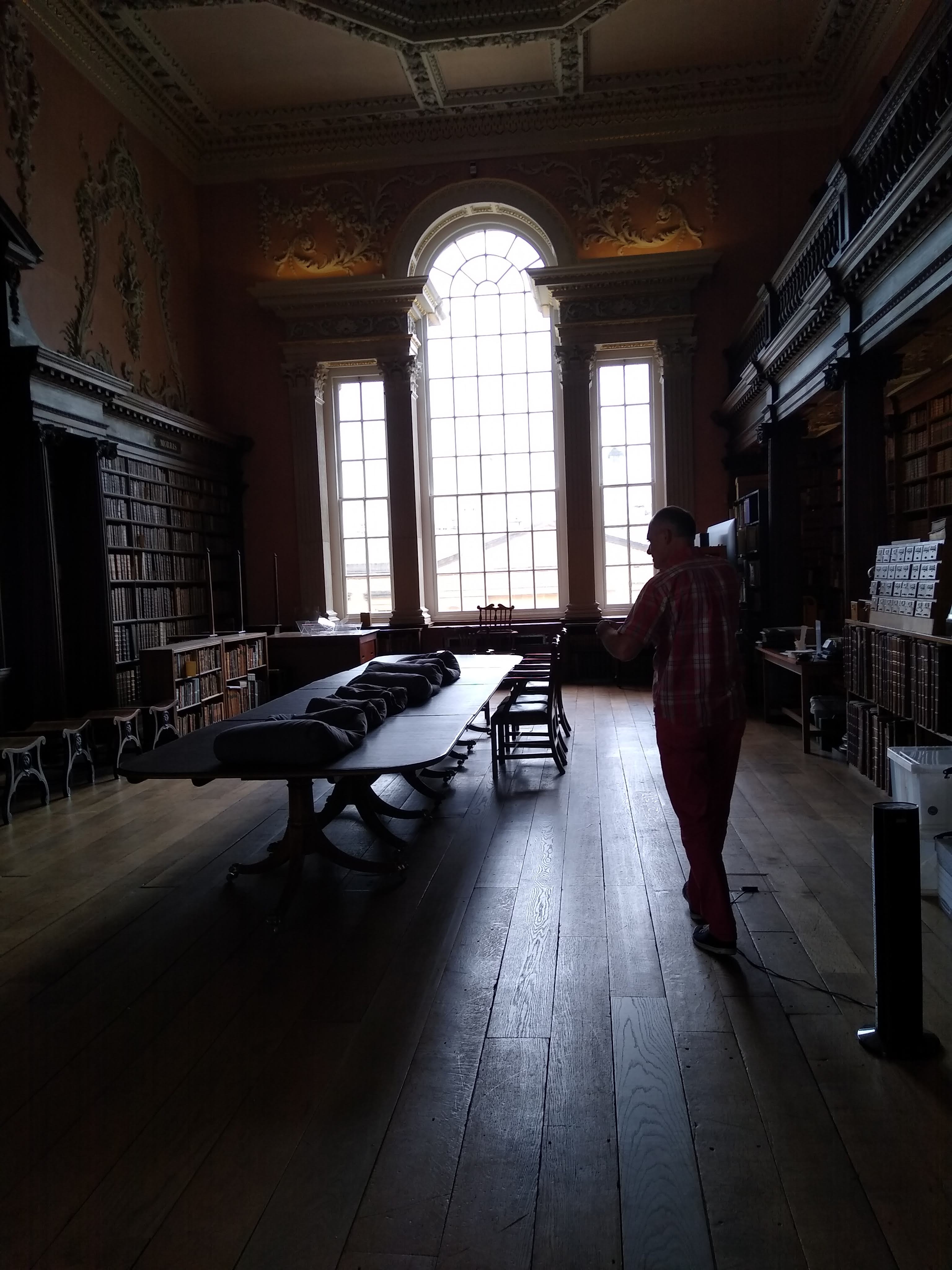
Last week I had the wonderful opportunity of attending the 8th Lincoln College Summer School of Greek Palaeography at the University of Oxford (July 25-30, 2022). Originally the school was to take place in 2020, but due to Covid restrictions, the school was postponed until this year. The classes were composed of three elements; in classroom reading sessions facilitated by expert instructors; library visits in which instruction was given with manuscripts in various institution libraries; finally, with an evening lecture on a particular topic related to Greek palaeography. The in class reading sessions and the evening lectures occurred at the Ioannou Centre for Classical & Byzantine Studies, which was right behind the Ashmolean Museum off of St. Giles Street. This was a very nice facility, with a central location, and a close proximity to the Ashmolean that was nice to stroll through and read Greek inscriptions on lunch breaks and grab a quick bite on the rooftop restaurant.

There were twenty students in total organized into three separate reading groups facilitated by a different instructor. These instructors were, Dr Georgi Parpulov, Dr Christos Simelidis, and Dr Dimitrios Skrekas. I was in Dr Georgi Parpulov's reading group.

Each day of class we were greeted by this
Roman statue of a Greek athlete

(I will post pictures from each of the library visits below with each picture labelled for their location. WARNING: there are many pictures)
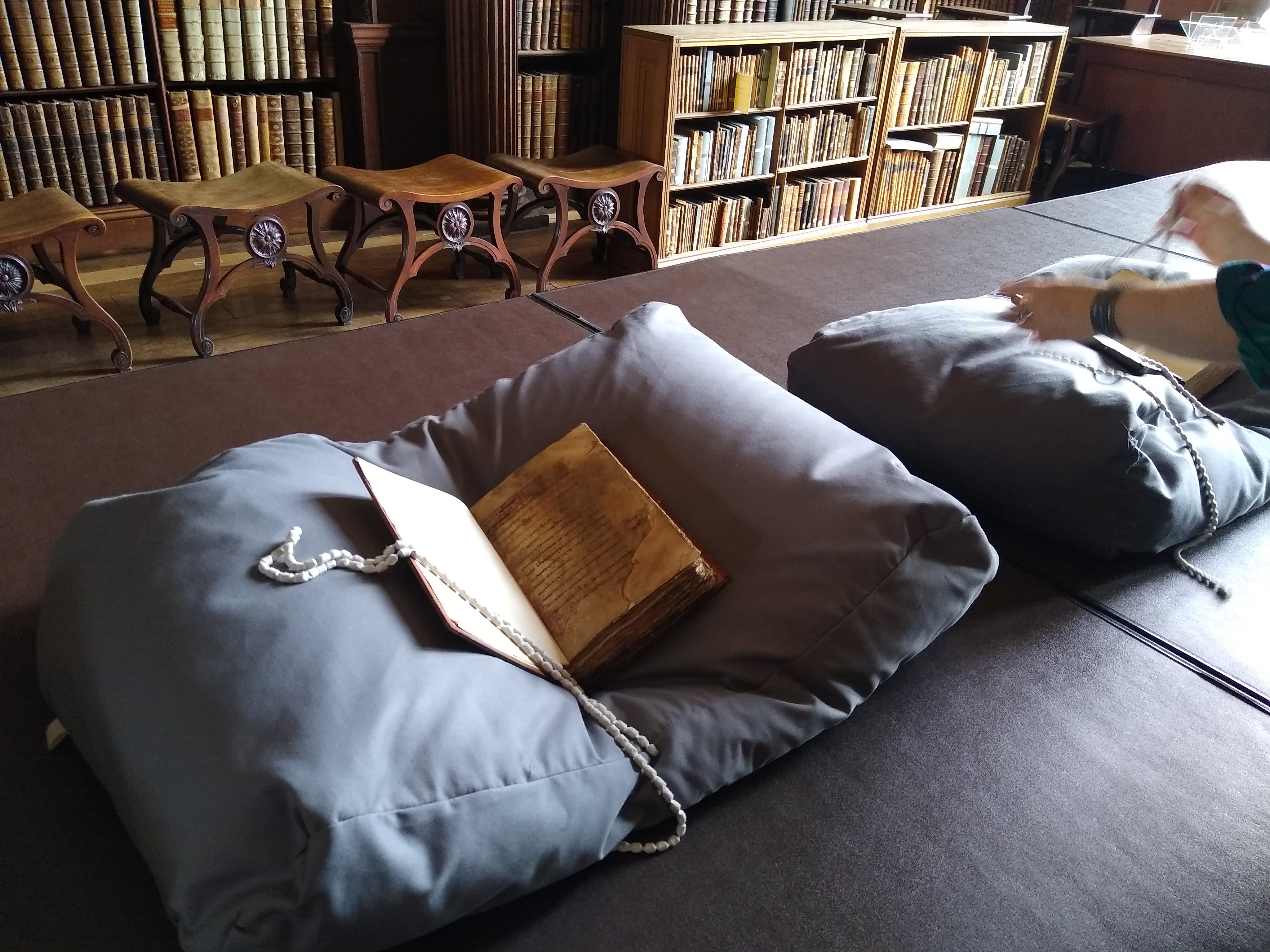
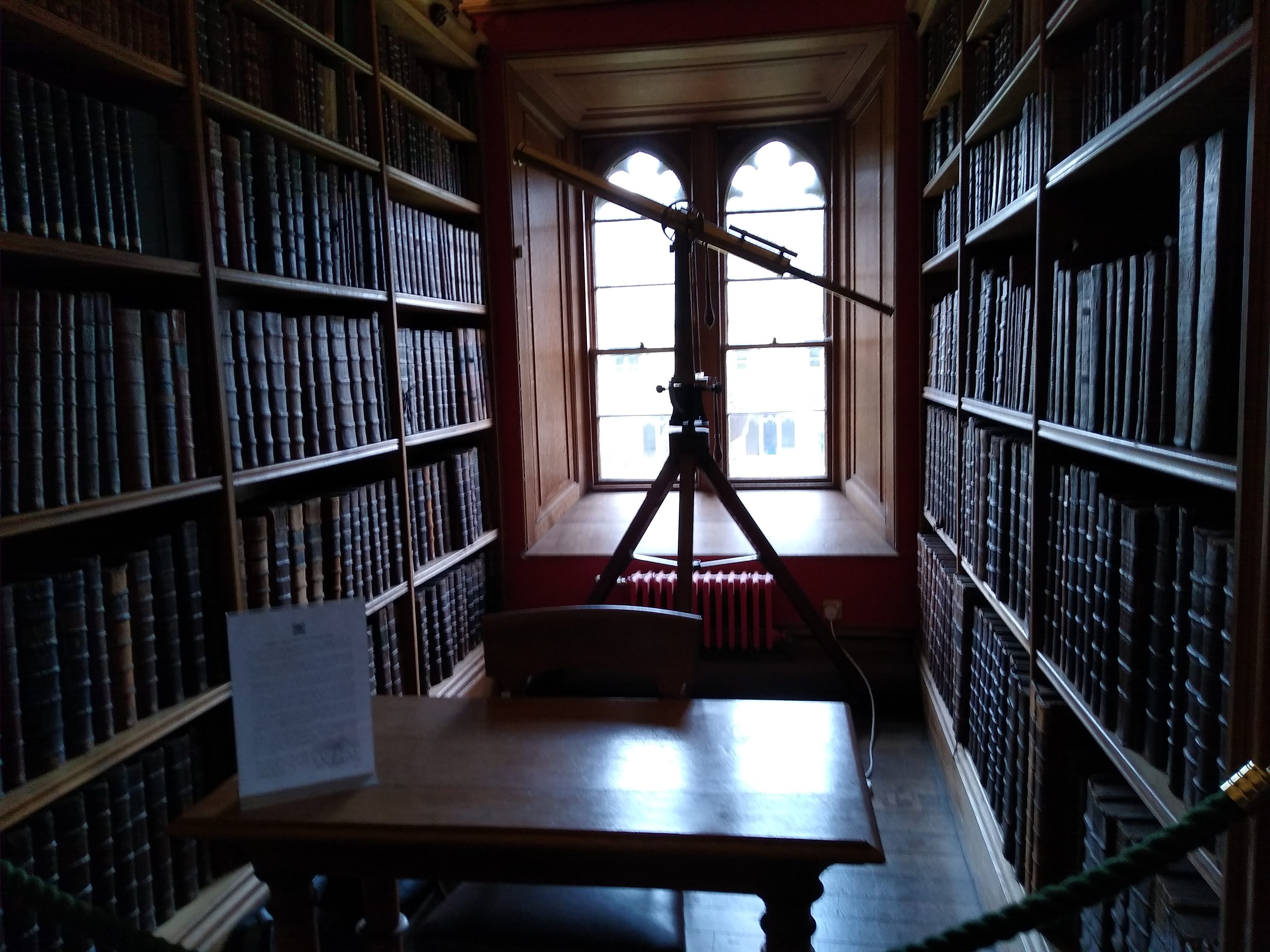
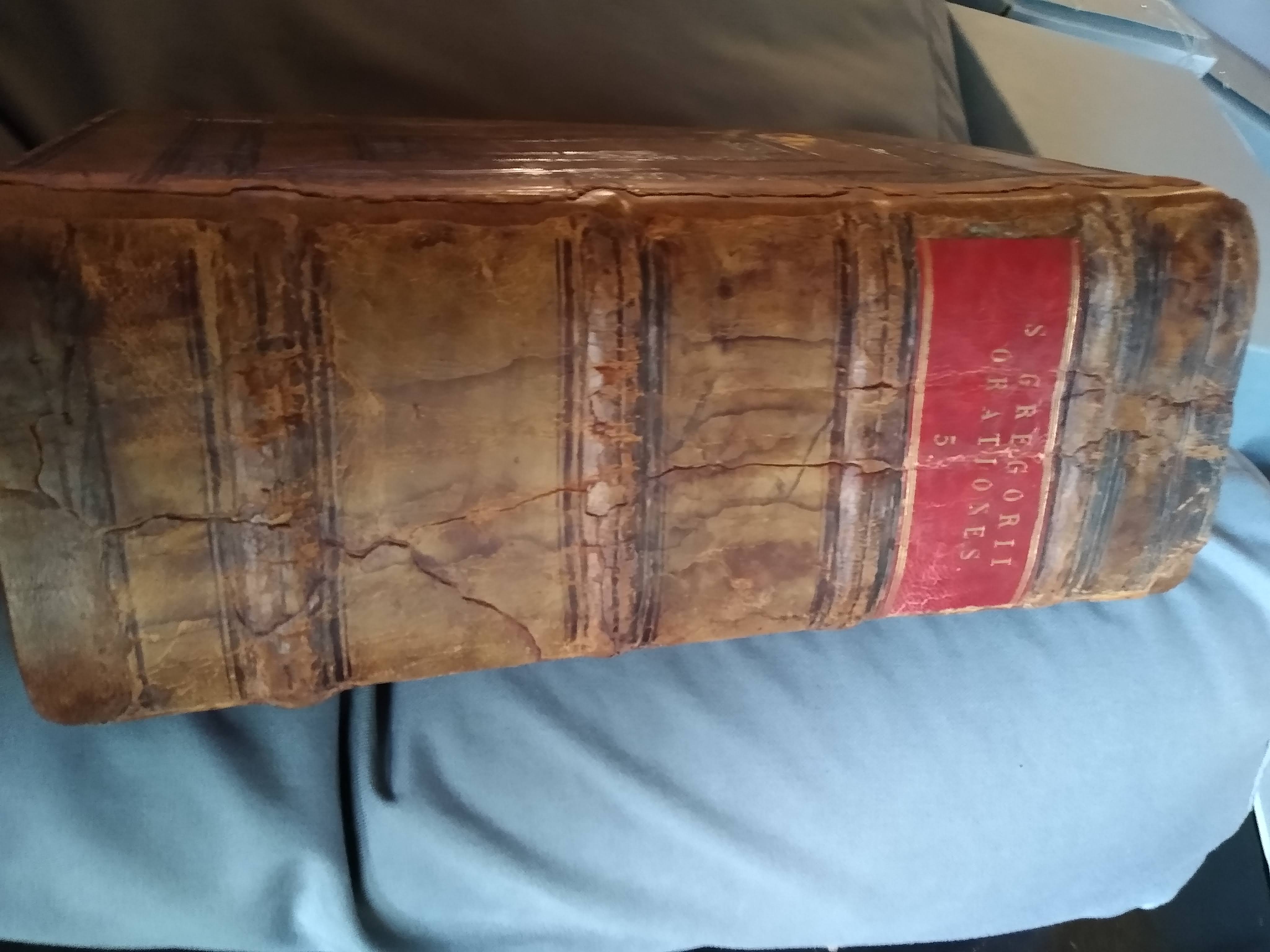
For the Monday library excursion visited the Christ Church library lead by Dr. Georgi Parpulov. The Christ Church library was a beautiful facility and the manuscripts were truly striking. One in particular had several paintings of the evangelists. To be honest, it was difficult to pay attention to the excellent instruction because the surroundings were so overwhelmingly beautiful and the codices were open before us in all their glory.

For the Tuesday library visit we made the first of two trips to the new Bodleian Library, called the Weston Library. Though the library was not as visually pleasing as Christ Church (there were no intricately carved wooden bookcases with volume upon volume stacked before us), the facilities were new and state of the art in the Horton Reading Room. Dr. Parpulov lead this visit for our group and the reading room had a large screen TV tied to a high quality camera that allowed Dr. Parpulov to point out features in the manuscript. After the presentation, the codices were laid out on the table and we were free to examine them in greater detail with either Dr. Parpulov or the curator turning the pages.

For the Wednesday library visit, we went to the Weston Library again, this time with Dr Dimitrios Skrekas facilitating the excursion and with a another curator. We were once again in the Horton Reading Room but with a new series of manuscripts. Unlike the last visit, the curator (a different one from the previous day) gave an interesting discussion on conservation practices and philosophy at the Bodleian. After the presentations, we were once again free to examine each manuscript and make observations.

My favorite library trip was by far the Old Magdalen Library at Magdalen College (pronounced Maudlin). It was facilitated by Dr. Nigel Wilson who was a wellspring of knowledge. The library room itself was something out of a medieval monastery. Ancient books lined the shelves and the windows looked past statues overlooking the cloistered garden. What was particularly enjoyable is that the Magdalen College policies allowed for us to handle the manuscripts ourselves. This provided great enjoyment flipping through the manuscripts and examining them in greater detail. Incidentally, I stayed on the Magdalene College Grounds, which are beautiful and well kept. The dining hall is fabulous and Addison's walk was lovely to stroll around in the evenings.

On Friday we had no library visits, only in class reading sessions. The school ended on Saturday with a three hour test in which we had to transcribe images of manuscripts. Overall, it was an amazing week filled with world class instruction, fantastic surroundings, ancient books, and meeting fellow manuscript nerds. I am grateful for the opportunity of attending the Lincoln College Summer School of Greek Palaeography.


Christ Church


Christ Church

Christ Church

Christ Church

Christ Church

Christ Church

Christ Church

Christ Church

Christ Church

Christ Church

Christ Church


Weston Library Tuesday Visit

Weston Library Tuesday Visit

Weston Library Tuesday Visit

Weston Library Tuesday Visit

Weston Library Tuesday Visit

Weston Library Tuesday Visit

Weston Library Tuesday Visit

Weston Library Tuesday Visit

Weston Library Tuesday Visit

Weston Library Tuesday Visit


Weston Library Wednesday Visit

Weston Library Wednesday Visit

Weston Library Wednesday Visit

Weston Library Wednesday Visit

Weston Library Wednesday Visit

Weston Library Wednesday Visit

Weston Library Wednesday Visit

Weston Library Wednesday Visit

Weston Library Wednesday Visit

Weston Library Wednesday Visit

Weston Library Wednesday Visit

Magdalen College


Magdalen College


Magdalen College

Magdalen College

Magdalen College

Magdalen College

Magdalen College

Magdalen College

Magdalen College

Magdalen College

Magdalen College

Magdalen College

Magdalen College

Magdalen College

Magdalen College

Magdalen College

Magdalen College

Magdalen College

Magdalen College

Magdalen College

Magdalen College

Magdalen College

Magdalen College

Magdalen College

Magdalen College

Magdalen College dining Hall

Magdalen College. Windows of the Old Library are to the right of the tower

Magdalen College

Magdalen College

Addison's Walk behind Magdalen College

Magdalen College

Magdalen College

Magdalen College

Magdalen College