Wednesday, August 3, 2022

Lincoln College Summer School of Greek Palaeography


Last week I had the wonderful opportunity of attending the 8th Lincoln College Summer School of Greek Palaeography at the University of Oxford (July 25-30, 2022). Originally the school was to take place in 2020, but due to Covid restrictions, the school was postponed until this year. The classes were composed of three elements; in classroom reading sessions facilitated by expert instructors; library visits in which instruction was given with manuscripts in various institution libraries; finally, with an evening lecture on a particular topic related to Greek palaeography. The in class reading sessions and the evening lectures occurred at the Ioannou Centre for Classical & Byzantine Studies, which was right behind the Ashmolean Museum off of St. Giles Street. This was a very nice facility, with a central location, and a close proximity to the Ashmolean that was nice to stroll through and read Greek inscriptions on lunch breaks and grab a quick bite on the rooftop restaurant.

There were twenty students in total organized into three separate reading groups facilitated by a different instructor. These instructors were, Dr Georgi Parpulov, Dr Christos Simelidis, and Dr Dimitrios Skrekas. I was in Dr Georgi Parpulov's reading group.

Each day of class we were greeted by this
Roman statue of a Greek athlete

(I will post pictures from each of the library visits below with each picture labelled for their location. WARNING: there are many pictures)
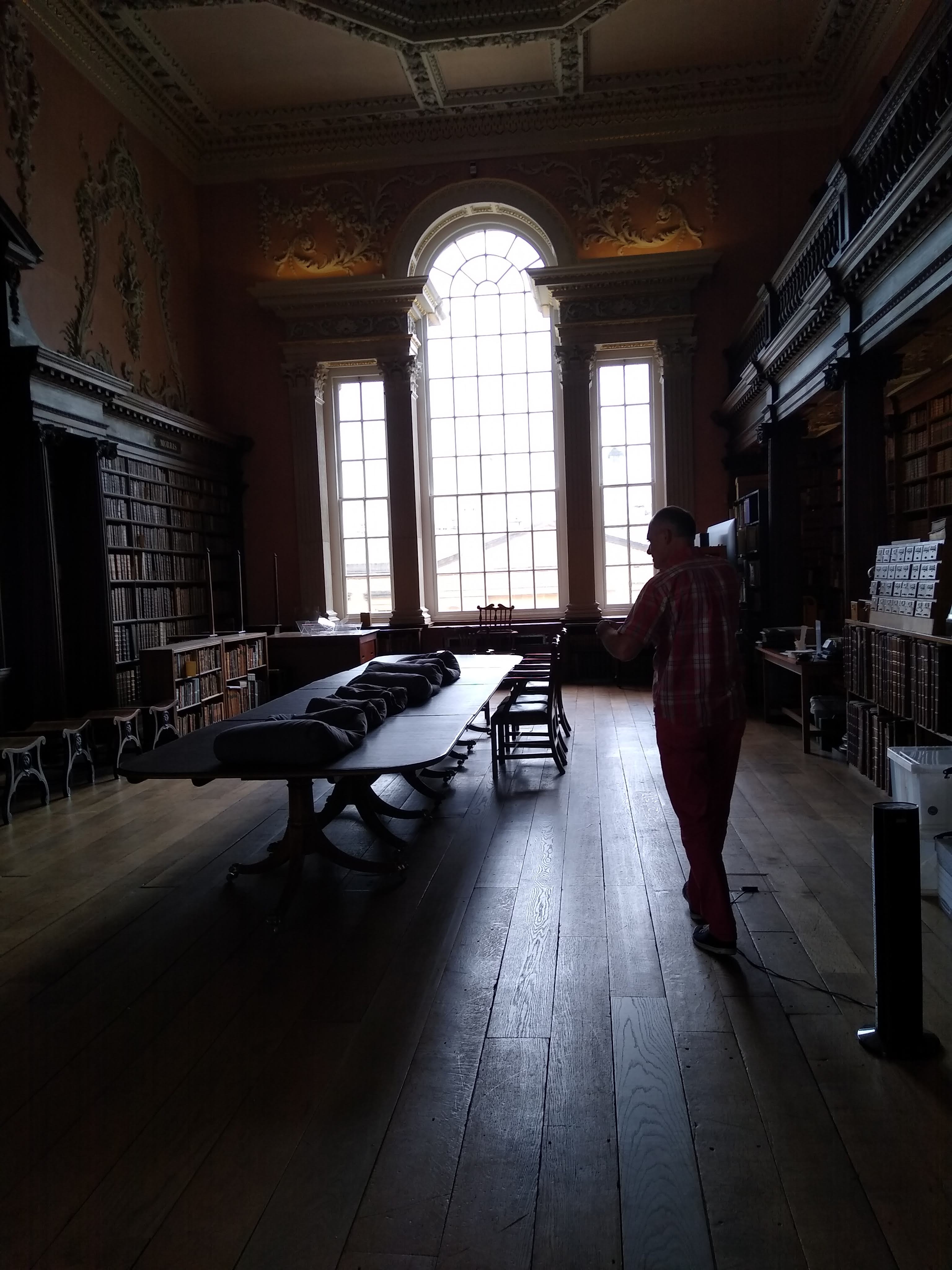
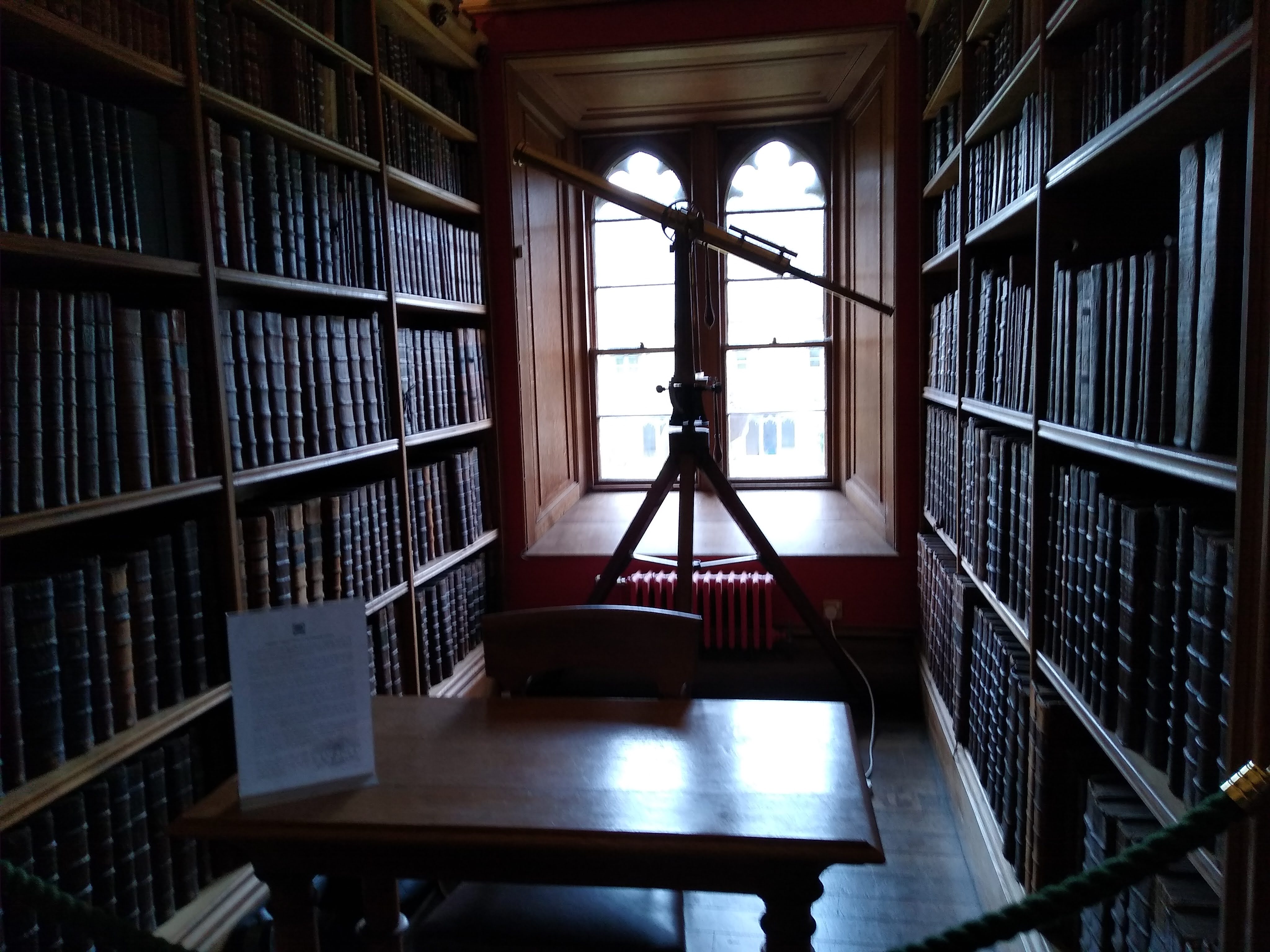
For the Monday library excursion visited the Christ Church library lead by Dr. Georgi Parpulov. The Christ Church library was a beautiful facility and the manuscripts were truly striking. One in particular had several paintings of the evangelists. To be honest, it was difficult to pay attention to the excellent instruction because the surroundings were so overwhelmingly beautiful and the codices were open before us in all their glory.

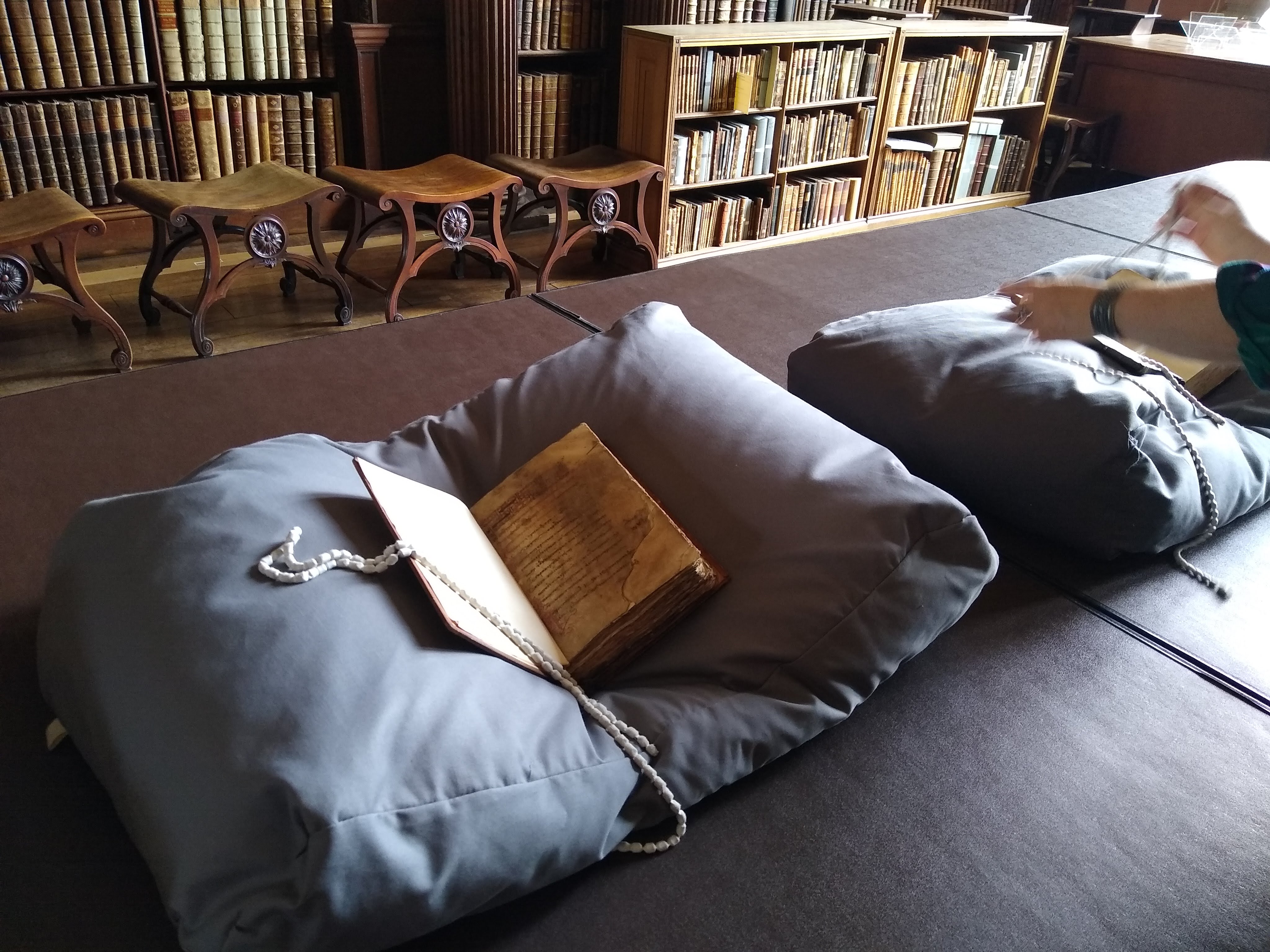
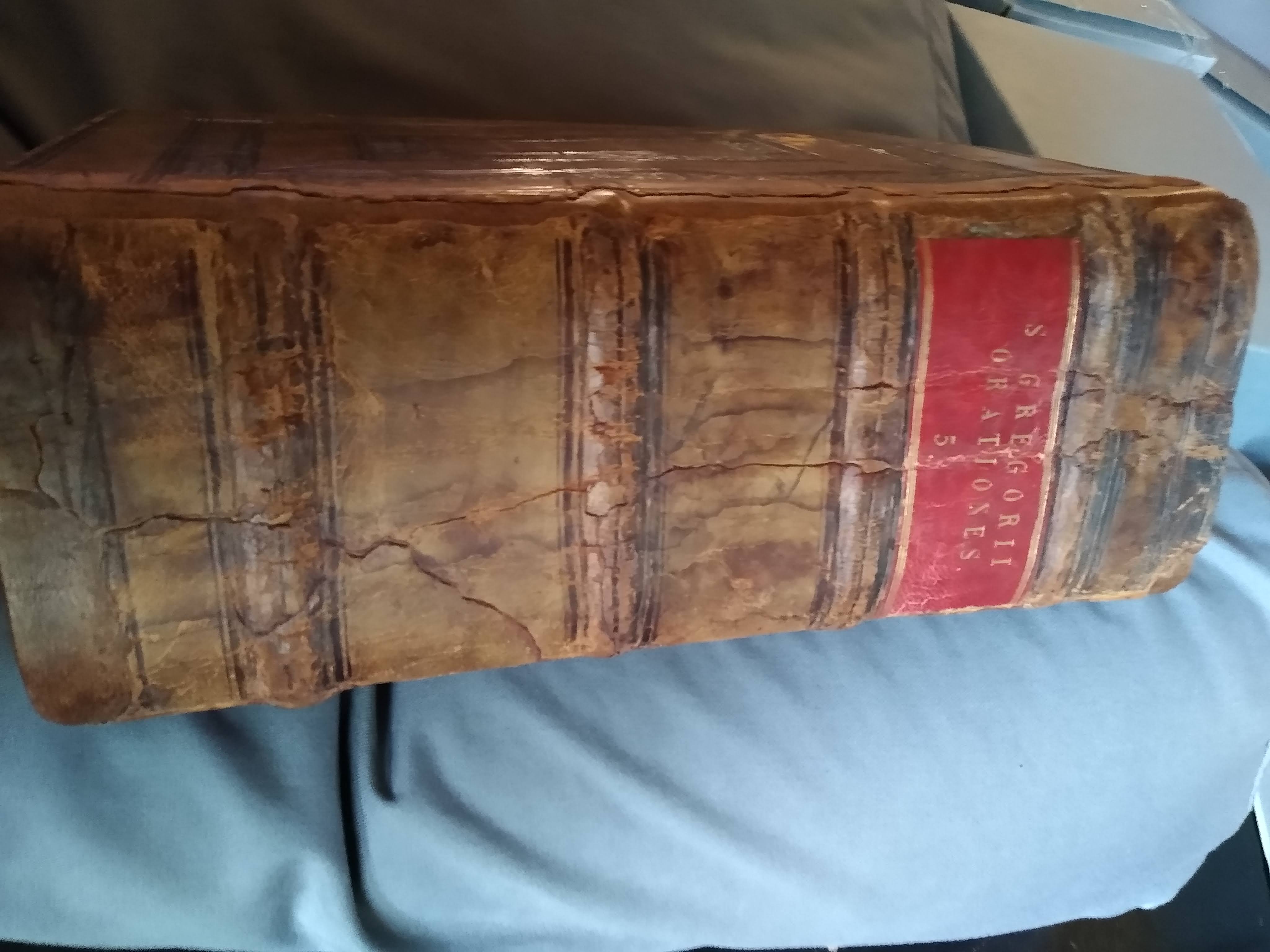
For the Tuesday library visit we made the first of two trips to the new Bodleian Library, called the Weston Library. Though the library was not as visually pleasing as Christ Church (there were no intricately carved wooden bookcases with volume upon volume stacked before us), the facilities were new and state of the art in the Horton Reading Room. Dr. Parpulov lead this visit for our group and the reading room had a large screen TV tied to a high quality camera that allowed Dr. Parpulov to point out features in the manuscript. After the presentation, the codices were laid out on the table and we were free to examine them in greater detail with either Dr. Parpulov or the curator turning the pages.

For the Wednesday library visit, we went to the Weston Library again, this time with Dr Dimitrios Skrekas facilitating the excursion and with a another curator. We were once again in the Horton Reading Room but with a new series of manuscripts. Unlike the last visit, the curator (a different one from the previous day) gave an interesting discussion on conservation practices and philosophy at the Bodleian. After the presentations, we were once again free to examine each manuscript and make observations.

My favorite library trip was by far the Old Magdalen Library at Magdalen College (pronounced Maudlin). It was facilitated by Dr. Nigel Wilson who was a wellspring of knowledge. The library room itself was something out of a medieval monastery. Ancient books lined the shelves and the windows looked past statues overlooking the cloistered garden. What was particularly enjoyable is that the Magdalen College policies allowed for us to handle the manuscripts ourselves. This provided great enjoyment flipping through the manuscripts and examining them in greater detail. Incidentally, I stayed on the Magdalene College Grounds, which are beautiful and well kept. The dining hall is fabulous and Addison's walk was lovely to stroll around in the evenings.

On Friday we had no library visits, only in class reading sessions. The school ended on Saturday with a three hour test in which we had to transcribe images of manuscripts. Overall, it was an amazing week filled with world class instruction, fantastic surroundings, ancient books, and meeting fellow manuscript nerds. I am grateful for the opportunity of attending the Lincoln College Summer School of Greek Palaeography.


Christ Church


Christ Church

Christ Church

Christ Church

Christ Church

Christ Church

Christ Church

Christ Church

Christ Church

Christ Church

Christ Church


Weston Library Tuesday Visit

Weston Library Tuesday Visit

Weston Library Tuesday Visit

Weston Library Tuesday Visit

Weston Library Tuesday Visit

Weston Library Tuesday Visit

Weston Library Tuesday Visit

Weston Library Tuesday Visit

Weston Library Tuesday Visit

Weston Library Tuesday Visit


Weston Library Wednesday Visit

Weston Library Wednesday Visit

Weston Library Wednesday Visit

Weston Library Wednesday Visit

Weston Library Wednesday Visit

Weston Library Wednesday Visit

Weston Library Wednesday Visit

Weston Library Wednesday Visit

Weston Library Wednesday Visit

Weston Library Wednesday Visit

Weston Library Wednesday Visit

Magdalen College


Magdalen College


Magdalen College

Magdalen College

Magdalen College

Magdalen College

Magdalen College

Magdalen College

Magdalen College

Magdalen College

Magdalen College

Magdalen College

Magdalen College

Magdalen College

Magdalen College

Magdalen College

Magdalen College

Magdalen College

Magdalen College

Magdalen College

Magdalen College

Magdalen College

Magdalen College

Magdalen College

Magdalen College

Magdalen College dining Hall

Magdalen College. Windows of the Old Library are to the right of the tower

Magdalen College

Magdalen College

Addison's Walk behind Magdalen College

Magdalen College

Magdalen College

Magdalen College

Magdalen College


Saturday, May 28, 2022

Demetrius on Letter Writing and Christian Epistles


I came across an interesting reference by a figure dating from either the second or first century BCE, Demetrius, who some have attributed as the Demitrius under whom Cicero studied. He is famous for being familiar with Aristotle's work "Rhetoric" and references it throughout his own writing, "On Style" (Περι Ερμηνειας).

In a fascinating section of this work Demitrius gives instructions on the proper style of letters and correspondence. He describes what he believes is the correct manner of writing correspondence; " A letter’s aim is to express friendship briefly, and set out a simple subject in simple terms" (231).
"(223) We will next discuss the style for letters, since that too should be plain. Artemon, the editor of Aristotle’s "Letters", says that a letter should be written in the same manner as a dialogue; the letter, he says, is like one of the two sides to a dialogue.
(224) There is perhaps some truth in what he says, but not the whole truth. The letter should be a little more formal than the dialogue, since the latter imitates improvised conversation, while the former is written and sent as a kind of gift."

"(227) Like the dialogue, the letter should be strong in characterisation. Everyone writes a letter in the virtual image of his own soul. In every other form of speech it is possible to see the writer’s character, but in none so clearly as in the letter.
(228) The length of a letter, no less than its range of style, should be restricted. Those that are too long, not to mention too inflated in style, are not in any true sense letters at all but treatises with the heading, “Dear Sir.” This is true of many of Plato’s letters, and that one of Thucydides."

"(231) If anyone should write in a letter about problems of logic or natural philosophy, he may indeed write, but he does not write a letter. A letter’s aim is to express friendship briefly, and set out a simple subject in simple terms.
(232) It has its own beauty, but only in expressions of warm friendship and the inclusion of numerous proverbs. This should be its only permitted philosophy, permitted since the proverb is ordinary, popular wisdom. But the man who utters sententious maxims and exhortations seems to be no longer chatting in a letter but preaching from the pulpit."
It is interesting how many of the New Testament epistles and not a few of the Apostolic Fathers's letters fall into these descriptions. For example, Romans and Hebrews in the New Testament, and 1st Clement and the Epistle of Barnabas can very much be described in the words of Demetrius as "not in any true sense letters at all but treatises with the heading, “Dear Sir.” (228). His reference to a letter including expressions of friendship and "the inclusion of numerous proverbs" broadly encompasses some of the more informal pastoral epistles, or the letters of John.

______________________________________

Aristotle, Longinus, Demetrius, Poetics. Longinus: On the Sublime. Demetrius: On Style (Translated by Stephen Halliwell, W. Hamilton Fyfe, Doreen C. Innes, W. Rhys Roberts. Revised by Donald A. Russell. Loeb Classical Library 199. Cambridge, MA: Harvard University Press, 1995), 477-483

Saturday, April 9, 2022

Interview With Apologist Wes Huff on Textual Criticism, Inspiration, and Inerrancy

Here is an interview that I had with Wes Huff, Director of Central Canada for Apologetics Canada. Wes has a lot of great Christian Apologetics content on his website(https://www.wesleyhuff.com/). Please be sure to check it out!

(https://youtu.be/ffg3AMIVWJI)


Tuesday, April 5, 2022

Ignatius, Polycarp, and the Pauline Authorship of 1 and 2 Timothy

Page from Codex H (015) at 1 Tim 2.2-6 (6th Century)

I recently read an older article in the academic journal Vigiliae Christianae that argues for Polycarp's belief that 1 and 2 Timothy were written by Paul. 

Kenneth Berding, "Polycarp of Smyrna's View of the Authorship of 1 and 2 Timothy," Vigiliae Christianae 53.4 (Nov., 1999): 349-360.

Here is the conclusion of the article as a summary.

"This paper has sought to demonstrate that there is a marked tendency in Polycarp's letter to the Philippians to cluster Pauline citations and allusions in the three passages in which he mentions the name of Paul. This indicates that Polycarp (consciously or unconsciously) considered the references to be Pauline. In addition, the first cluster contains a phrase from 1 Tim 6:10 followed by one from 1 Tim 6:7. The second cluster contains a phrase from 2 Tim 4:10. The most plausible conclusion which can be drawn is that Polycarp considered these also to be Pauline. If Harrison (and much of modern scholarship) is correct in linking Titus to 1 and 2 Timothy, Polycarp has become the earliest external witness to the belief in the early church that Paul was the author of the Pastoral Epistles." (pg 360).

I find the collective evidence presented as pretty persuasive. In support of this early attestation, it appears that Ignatius of Antioch, in his letter to the Ephesian church, may have had 1 and 2 Timothy in view when he made a passing reference to Paul.

"You are the highway of those who are being killed for God's sake; you are fellow initiates of Paul, who as sanctified, who was approved, who was deservedly blessed─may I be found in his footsteps when I reach God!─who in every letter remembers you in Christ Jesus." (Ign. Eph. 12.2)

Which letters may Ignatius be referring to here? Obviously, it is likely he is referring to the New Testament writing, Ephesians. However, this is only one letter, why does he mention "every letter" (πάση επιστολη), which seems to be referring to every letter in the Pauline corpus? Most commentators of Ignatius see this reference as hyperbole. Paul mentions the Ephesian Christians in only four of his letters, 1 Corinthians, Ephesians, and first and second Timothy (pg 163-164).

Perhaps another solution is that Ignatius is referring to letters that were written to the Ephesian Church directly. This would include of course Ephesians, but also 1 and 2 Timothy as well for Paul had left Timothy in Ephesus to minister and instruct the Christians in the city (1 Tim 1:3). Thus it might be that once Timothy received the letter, he read it out to the Church there. If this is what Ignatius is referring to (granted this is speculative) then Ignatius is attributing Pauline authorship to the letters of 1 and 2 Timothy.

______________________________________

Holmes, Michael W., ed. The Apostolic Fathers: Greek texts and English translations. Grand Rapids: Baker Books, 1999.

Saturday, March 19, 2022

Deconstructing New Testament Autographs

I only just recently learned of Dr. Jamin Andreas Hübner, professor of economics at the University of the People, and a Research Fellow for the Center of Faith and Human Flourishing at LCC International University, Klaipėda, Lithuania. One of the topics that Hübner's research engages with is Christian "fundamentalism." I had not known or engaged with Hübner before I came across a tweet that he made interacting with my 2016 JETS article "What are the NT Autographs?" He tweeted that 
"Tim Mitchell in JETS 59.2 (2016) - the journal by ETS (that requires member[s] to be inerrantist), attempts to patch up these problems by bestowing Divinity/perfection to the "released" autograph, not the *original* original autographs, which doesn't solve problems..."
My article Hübner was referencing was this one,
"What are the NT Autographs? An Examination of the Doctrine of Inspiration and Inerrancy in Light of Greco-Roman Publication." JETS 59/2 (June 2016): 287-308.
Intrigued and delighted by his engagement with my article, I did some more digging and learned that he had recently written a book in which he fleshes out his arguments against an inspired "inerrant" autograph.


Hübner's interaction with inerrancy and autographs is found on pages 71-73, the screen shot of each page I include below.


I too, like Hübner struggled with the evangelical doctrine of inerrancy. This curiosity (some would call doubt) is what initially drove me into the field of New Testament textual criticism. Some of these issues that I had with inerrancy didn't begin to iron out in my mind until I began to gain a better grasp of the ways in which books were copied and circulated in the first few centuries of the Christian era. It was these insights that I culled together in the JETS article. After publication, I realized a few issues with the definitions my JETS article. One of which Hübner points out, without maybe realizing it. He fails to distinguish between the autographs as "text" and the autograph as "physical document."
I realized that I was not as clear on this distinction in my JETS article, and I attempted to flesh this out better in another article which was published recently.

Where Inspiration is Found: Putting the New Testament Autographs in Context,” in Southern Baptist Journal of Theology 24.3 (Fall 2020): 83-101.
In this article I wrote concerning the "autograph."
"the term “autograph” is not very helpful in describing the multifaceted aspects of divine inspiration and the composition of the NT writings, because at every phase of the draft stages, the document(s) would technically be “autographs.” Yet this is clearly not what is meant by “autograph” in doctrinal statements. Any definition of the original text, or “autograph,” must take these aspects into consideration." (pg. 92)
I continue on,
"Therefore, in reference to the NT, the “autograph,” as often discussed by apologists, theologians, and doctrinal statements, should be defined as the text of the completed authorial work the moment in which it was released by the author for circulation and copying, not earlier draft versions or layers of composition." (pg. 96)
Finally, I wrote,
"Certainly, the physical properties of the autograph (whether papyrus, parchment, wax or wooden tablet, etc.) helped to shape the text, however, it is the text—the wording—that was inspired, not the physical medium of the material autograph. Passages in the scriptures, such as Colossians 4:16, 1 Thessalonian 5:27, and 1 Timothy 4:13, imply a copying and distributing process. For Paul, addressing these congregations, it was imperative that the recipients received the text of the epistle, not the original physical material autograph penned by the sender of the letter." (pgs. 96-97)
Though my comments might not address Hübner's concerns over the issues of an inspired autograph, it is my hope that they do. Hopefully he might engage with my arguments more fully in the future.

Monday, December 20, 2021

Pliny the Younger: A Written Work as a Lasting Monument


In the midst of praising his friend Octavius's excellent poetical works, Pliny urged him to not delay the publication of his friend's work. The reasons were twofold. 
First, some of his verses had already begun to circulate without Octavius's consent. Accidental and unwanted publication of an author's unfinished writings often occurred in antiquity. In response, Pliny urged Octavius to quickly publish his completed writing so that those pre-circulating verses could then be claimed as his own.
Second, Pliny believed that completing and publishing a written piece would be a lasting monument to the author's fame. The work would far outlive the author's life and ensure their memory lived on in those who read the book.
"What an indolent fellow you are, or perhaps I should say how hard-hearted you are and almost cruel to keep back so long such splendid volumes of verse! How long will you deprive yourself of the chorus of praise that awaits you, and us of the pleasure of reading them? Do let them be borne on the lips of men and circulate through all the wide regions where the Roman tongue is spoken. People have long been eagerly looking forward to your publishing them, and you really ought not to cheat and disappoint them any longer. Some of your verses have become known, and - no thanks to you - have broken down the barriers you set round them, and unless you rescue them and include them in the main body of your work they will one day, like vagrant slaves, find someone else to claim the ownership of them. Don't lose sight of the fact that you are but mortal, and that you can only defend yourself from being forgotten by such a monument as this: all other titles to fame are fragile and perishable, and come to a sudden end as soon as the breath is out of your body. . . . However, as to publishing, do as you please, but at least give some public readings, in order to stir you on to publishing, and that you may at length see how pleased people will be to hear you, as I have for a long time been bold enough to anticipate on your account. For I picture to myself what a run there will be to hear you, how they will admire your work, what applause is in store for you, and what a hush of attention." (Ep. 2.10)
I find it fascinating that in the same letter (Ep. 2.10) Pliny both admits to the volatility of ancient publication (in that someone may plagiarize Octavius's work) and proclaims that a published writing would be akin to a great monument for the author, far outliving them and ensuring the author's memory lived on into the future.

This idea of a written piece being a part of the author's lasting fame Pliny expounded upon previously. In an earlier letter to his friend Caninius Rufus, he urged him to drop everything and get to writing.
"But really it is time that you passed on your unimportant and petty duties for others to look after and buried yourself among your books in that secluded yet beautiful retreat. Make this at once the business and the leisure of your life, your occupation and your rest; let your waking hours be spent among your books, and your hours of sleep as well. Mould something, hammer out something that shall be known as yours for all time. Your other property will find a succession of heirs when you are gone; what I speak of will continue yours for ever - if once it begins to be. I know the capacity and inventive wit that I am spurring on. You have only to think of yourself as the able man others will think you when you have realised your ability. Farewell." (Ep. 1.3)
It is obvious that Pliny was fully aware of the potential for copyist errors and plagiarism, with regard to ancient publication practices. Nevertheless, Pliny fully expected that a book would continue to be considered the author's own work and live on into posterity. This is because Pliny himself was intimately familiar with written works that had been penned hundreds of years before his time.
It is good to remember this ancient understanding and tension between the problems inherent in ancient publication and the glory and fame a written work could give the author long into the future. Especially when we approach the practice of textual criticism of the New Testament. Even though it may be difficult for modern textual critics to discern between later textual changes and the author's intended words. The response should not be to then assume that there was no completed (whether intentional or otherwise) version of the text that the author intended. This is one of the concluding arguments that I make at the end of one of my published articles,
"Though the modern textual critic may have difficulty discerning between the authorial text and later additions and corruptions made to the text after the document began to circulate, this does not mean that the ancients did not make these distinctions or that the modern textual critic should not" (Mitchell, "Exposing Textual Corruption," pg. 290)
_______________________
English translation of Pliny's Letters are by J.B. Firth, http://www.attalus.org/info/pliny.html

"Exposing Textual Corruption: Community as a Stabilizing Aspect in the Circulation of the New Testament writings during the Greco-Roman Era." JSNT 43.2 (December 2020): 266-298.

See also my comments on page 298 of,